
 0
0  Login
Login 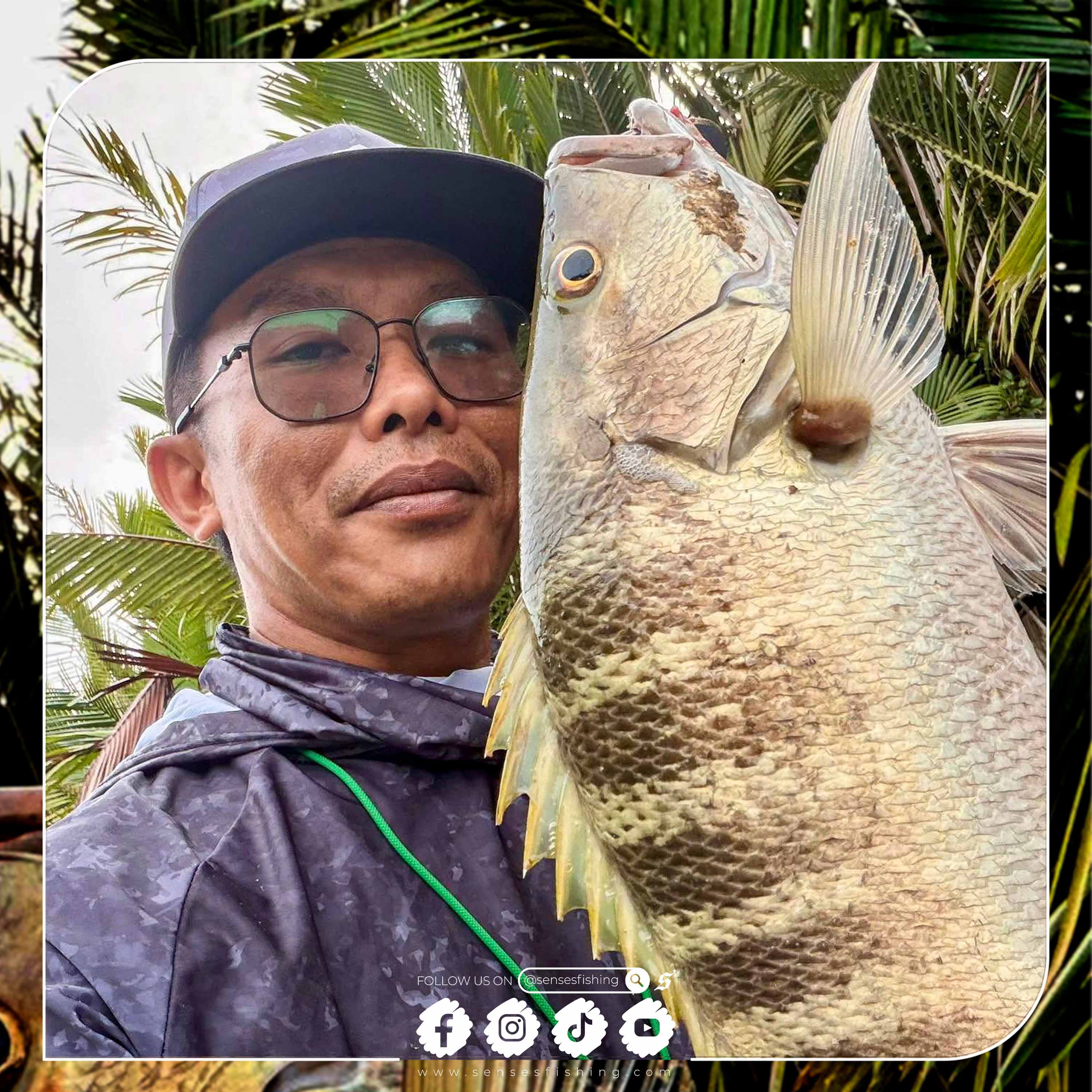

The Sabah River Titan
Extracting a Papuan Black Bass from the heavy, unforgiving cover of Sabah rivers is a true test of will, which Senses Pro Angler Alip Aldam dominated with his Senses Counterblow V3. The Papuan Black Bass uses the complex, tangled geography of Sabah to its full advantage, requiring the angler to be faster, stronger, and more decisive on every turn of the battle.
• The Predator's Mindset: A Papuan Black Bass in Sabah will stop at nothing to return to its dark, sunken home deep beneath the surface after the initial hook-set, testing the integrity of your leader and knots. 👊
• The Environmental Cue: Keep your presentation tight to the complex banks of Sabah, where the shadows provide the perfect cover for a Papuan Black Bass waiting for the right moment to strike. 🗺️
• The Silent Wait: You must filter the continuous feedback pulsing through the blank, enabling you to separate a temporary, frustrating current drift from the hard, sudden jaw-snap of a concealed apex predator. 🎣
To elevate your performance and ensure that every session is optimized for maximum hook-up potential, check out the specialized technical loadout below. Fully equipped with the high-performance Senses Counterblow V3, Senses Mojiko 20lb line, Senses Absorber 30lb leader, Senses Komodo VX4 Treble Hook, Senses Stainless Steel Power Split Ring, and Senses MG Snap no.3, this tactical configuration gives you the mechanical leverage to dictate the fight from the very first second.
Configuration Report

The Papuan Black Bass: River Predator Structure Profile
The Papuan Black Bass (Lutjanus goldiei), globally recognized by names such as the New Guinea Bass, Papuan Snapper or Niugini Black Bass, known regionally in Malaysia & Borneo as Ikan Kanai/Kanai or Tembaring and in Papua as Ikan Bass Hitam, represents one of the most formidable apex predators found within the freshwater basins and complex mangrove labyrinths of the region. Anatomically distinguished by an exceptionally dense, muscular, and robust physique, this species possesses a massive, blunt head structure reinforced by a powerful jaw hinge designed specifically for crushing hard-shelled prey. Its coloration typically manifests as a deep, dusky charcoal-bronze, a vital adaptation for blending into the shadows of its habitat, while its fins maintain an earthy, olive-yellow hue rather than the vibrant reds seen in related snapper species. Thriving in the most challenging, high-structure environments—including submerged timber, intricate root balls, and deeply undercut riverbanks—the Papuan Black Bass utilizes its highly sensitive lateral line to detect minute vibrations, allowing it to execute sudden, lethal ambushes on crustaceans and smaller baitfish. As a highly aggressive and territorial hunter, the Papuan Black Bass is perfectly evolved for life in deep, tannin-stained jungle rivers, where it relies on its explosive initial strike to stun prey before immediately using its immense torque to dive back into jagged, structural sanctuaries to escape capture.

Anatomical & Biological Adaptations
• Appearance & Physical Traits
The Papuan Black Bass is a high-torque teleost predator characterized by a robust, laterally compressed, and powerfully built muscular profile. Its physiology features a massive, blunt cranial structure with a steeply sloping dorsal head region, engineered to house a heavy, bone-crushing jaw. Unlike its snapper cousins, its scales exhibit a deep, dusky charcoal-bronze pigmentation, while its fins are muted, olive-yellow. Adults typically mature to lengths exceeding 90 cm and achieve maximum biomass weights often surpassing 15 kg, reflecting their status as true riverine giants.
• Specialized Adaptation
This apex hunter utilizes a highly advanced neuromast-based lateral line system that acts as an intricate sensory grid. This biological network detects micro-pressure differentials and low-frequency hydrodynamic vibrations (typically in the 1 Hz to 50 Hz range) generated by the movement of crustaceans and baitfish. This adaptation is critical for navigation in the murky, tannin-stained jungle rivers, allowing the species to accurately map its environment and track the precise directional movement of prey in zero-visibility conditions.
• Special Characteristic
The species possesses an incredibly ossified, maxillary and mandibular structural adaptation engineered for immense, concentrated bite force. By engaging hypertrophied adductor muscles, the Papuan Black Bass generates crushing mechanical pressure, utilizing its reinforced, conical dentition to lock onto and shatter the defensive carapaces of crabs and large river prawns. This structural mechanic favors sudden, short-range ambush propulsion from dense submerged timber and undercut root systems, allowing it to instantly pin prey with zero margin for escape.
• Camouflage & Countershading
The Papuan Black Bass employs disruptive countershading to minimize its visual signature within the shadows of dark river systems. Its dorsal and lateral flanks are dominated by dark, bronze-charcoal tones, while the ventral region remains lighter. This pigmentation matrix effectively breaks up its massive morphological outline against the dappled light and chaotic shadows of submerged logs and tangled root systems, optimizing its concealment as it waits in ambush for unsuspecting prey in sub-surface littoral zones.
• Sophisticated Sensory Systems
Beyond its retinal adaptations optimized for hunting in low-light, tannin-rich water, the species utilizes highly refined mechanoreceptors and chemoreceptors to tune into the specific acoustic and chemical signatures of prey items shifting in the substrate. This biological integration allows it to process environmental stimuli efficiently and execute precise striking vectors, navigating fluctuating current flow rates and dense structural obstructions with minimal reliance on visual input.
• Diet & Habitat Thriving
As a premier opportunistic carnivore, the Papuan Black Bass exhibits a diet heavily reliant on large decapod crustaceans, such as freshwater prawns, and smaller teleost fish. It demonstrates extreme ecological dominance, thriving across environmental gradients ranging from deep, high-flow jungle channels to labyrinthine mangrove environments. Crucially, it is perfectly adapted for life in deep, oxygen-rich current zones, utilizing its sheer physical size and aggressive territoriality to displace competitive predators in its established domain.
• Fighting Style & Angling Tips
Renowned for its unparalleled, high-torque, lateral-burst fighting mechanics and sheer brute-force power, the Papuan Black Bass exerts extreme kinetic energy on terminal tackle. To counter its power-driven, initial "slam" and its tendency to dive headlong into jagged bottom structures, you must utilize a high-modulus carbon rod engineered with superior structural lifting power. Because the species leverages its high surface-area body mass and massive head against hydraulic flow to anchor itself in dense submerged timber, operators must maintain rigid, disciplined line tension and a finely calibrated, high-output mechanical drag (e.g., 4 kg to 7 kg setting) to immediately extract the specimen from structural hazard zones the millisecond the hook is set.
The Papuan Black Bass: Gear & Strategy ⚡🐟
A. Precision Extraction: The use of a high-buoyancy, heavy-profile lure, paired with the responsive, fast-action taper of a high-modulus rod, allows you to execute a rhythmic, sweeping retrieval cadence. This mimics the erratic, struggling flight of a large crustacean or wounded baitfish, effectively stimulating the predatory instinct of a Papuan Black Bass hiding within deep-river structural cover, triggering an aggressive, high-velocity ambush strike.
B. Direct Hookset: Utilizing a high-sensitivity, low-stretch setup, such as 20lb braided line paired with a heavy-duty leader, creates an instant, high-tension connection to your offering. This configuration is critical for transmitting the faint, initial "thump" of the fish investigating your lure, ensuring an immediate, authoritative hookset the exact millisecond the Papuan Black Bass engages its ossified jaw structure to crush the target.
C. Fight Management: The rod’s powerful, high-tonnage backbone and specialized structural taper are engineered to absorb the massive, explosive lateral-burst torque and violent head-shakes characteristic of a trophy-class catch. Maintaining constant, maximum lifting pressure is essential to prevent the Papuan Black Bass from utilizing its laterally compressed, deep-bodied frame to anchor itself against the current within dense, submerged timber or jagged structural hazards, which would otherwise provide the leverage necessary to dislodge the high-strength treble hooks.

The Papuan Black Bass: Operational Protocol 🌊⏱️
I. Tactical Location & Positioning
Target deep-river drop-offs, high-flow jungle channels, and undercut bank structures (depths of 2 to 10 meters) where current velocity is redirected by submerged timber, dense root balls, or jagged rock outcrops. These high-energy habitats allow this apex predator to utilize its massive, muscular profile to patrol structural bottlenecks, positioning itself in the shadows of slack water to launch explosive, high-torque ambushes on passing crustaceans and baitfish.
II. Chronological Windows
Peak metabolic activity and hunting cycles correlate with dusk-to-dawn transitions and stable barometer phases, specifically during the golden hours of early morning (05:30–07:30) and late evening (18:00–20:00). Presentation efficiency is significantly higher during these low-light periods, as the Papuan Black Bass relies heavily on its lateral line system to detect the precise acoustic and pressure-wave signatures of prey, allowing it to navigate and strike within the tannin-stained, low-visibility columns of its domain.
III. Environmental Dynamics
The species maintains its status as the supreme hunter of tannin-stained jungle river systems, patrolling the interface between fast-moving current and structural refugia. Deploying high-performance gear provides a vital tactical advantage, delivering the extreme sensitivity required to monitor subtle vibration changes, irregular lure pulsations, and the violent, bone-jarring strike signatures of a trophy-class bass navigating the densest, most snag-prone freshwater environments.
IV. Feeding Mechanics & Impact Force
Utilizing a massive, ossified jaw structure and hypertrophied muscles, the predator snaps onto its prey with high-velocity, crushing intensity. Characterized by extreme initial torque and aggressive, head-shaking maneuvers rather than sustained pelagic running, the species leverages its massive, deep-bodied frame to instantly anchor itself against underwater logs or root systems. A high-modulus, high-tonnage rod blank is essential to manage this crushing pressure, providing the structural backbone necessary to maintain control and keep the fish clear of jagged, gear-destroying hazards during the initial stage of the fight.
V. Hydrological Cadence
During peak foraging intervals, manipulate your lure using a deliberate, high-torque twitching cadence or a controlled, aggressive "stop-and-go" retrieve maintained at a rate of 20–40 cycles per minute. This presentation replicates the erratic movement of a large, struggling crustacean or wounded prey, triggering a dominant, territorial feeding strike from the patrolling Papuan Black Bass before it can utilize its superior mass to dive into the protection of complex, snag-heavy structural sanctuaries.
Hunting Grounds: Strategic Topography 📍🏞️


Papuan Black Bass: Technical Loadout Blueprint 🌊🎣
1. Kinetic Backbone: Senses Imperial Jade - Ironman Expedition Arms
> A pinnacle of rod engineering, this expedition-grade tool features a specialized high-tonnage carbon matrix that blends extreme sensitivity with raw, uncompromising lifting power. The rod is perfectly tapered to detect the slightest pressure change of a Papuan Black Bass investigation, while providing the decisive mechanical advantage required to immediately extract a trophy-sized specimen from the heart of dense, jagged submerged timber or entangled root systems.
2. Neural Link: Senses Mojiko (30lb) & Senses Absorber (40lb)
> A high-density, 8-strand braid ensures a direct, high-tension connection with zero stretch, essential for an immediate, bone-shattering hookset. The 40lb Japanese fluorocarbon leader provides the critical abrasion resistance against sharp, submerged woody debris and rock structures, ensuring the lure’s action remains precise while preventing line-failure in high-risk, structural-heavy zones.
3. Primary Lure Systems: Precision Interception
Senses Kaido Shad 76SS - Fast Sinking Lure
> A 76mm fast-sinking shad designed for rapid depth acquisition and high-current stability. Its dense profile and fast-sinking rate make it an ideal choice for reaching deep, high-flow river pools quickly. The lure’s erratic, vibration-heavy swim pattern triggers aggressive territorial strikes, especially when retrieved through the shadow zones of submerged structure.
Senses Diablo Minnow 80S - Sinking Minnow
> An 80mm sinking minnow built to withstand heavy-duty river usage. With a high-durability internal frame and a weighted belly, it provides a stable, swimming action that cuts through turbulent water column flows. This lure is specifically balanced for a darting, wounded-prey motion that excels in flushing out territorial Papuan Black Bass from beneath deeply undercut, structural riverbanks.
4. Terminal Interface: Senses Heavy Duty Stainless Steel Power Split Ring
> Engineered for maximum structural integrity, the Power Split Ring is constructed from high-tensile, corrosion-resistant stainless steel. Its multi-wrap design ensures that even under the extreme, repetitive, and violent torque exerted by a thrashing Papuan Black Bass, the connection remains absolute, preventing the failure points common in standard terminal hardware.
5. Hooking System: Senses Komodo 5X Treble Hook
> Engineered for apex-predator encounters, the Komodo V5X features a reinforced, ultra-high-carbon steel architecture capable of withstanding the extreme, bone-crushing jaw pressure of a trophy-class Kanai. Its 5X-strength gauge prevents hook-opening during high-torque, erratic thrashing, while the precision-engineered, chemically sharpened needle points ensure instant, deep-tissue penetration on the initial strike.
6. Line Management: ABX Spiral Wrap
> An essential protective accessory for the serious angler, the Senses Spiral Wrap is engineered to organize and protect your main line and leader connections from abrasion and friction. Its flexible, high-durability polymer construction allows for easy application, ensuring your line remains shielded from contact with sharp river structures and minimizing the risk of premature failure during high-intensity fights.
7. Ergonomic Control: ABX Handle Set Baitcasting Reel (Type 2)
> The ABX Handle Set (Type 2) provides the ergonomic leverage and fluid rotation required for high-torque retrieves. Engineered with a precision-balanced structure and high-grip, tactile knobs, this handle set minimizes angler fatigue during prolonged sessions and ensures absolute, consistent control when winching a heavy, thrashing Papuan Black Bass out of dense cover.
✅ Verified by Senses Pro Tester & Senses Pro Angler
Field-tested for absolute durability. This setup ensures a high-integrity connection during the most violent saltwater extractions.

♦ SENSES COUNTERBLOW V3: Redefining Performance and Versatility ♦
The Senses CounterBlow V3 is a highly sensitive baitcasting rod with a one-piece design, built for precision and durability.
Crafted with advanced Cross-X technology carbon tape in a multi-axis style, the CounterBlow V3 offers superior stability and exceptional handling in any fishing environment. Whether you’re targeting light strikes or preparing for a sudden big catch, this rod is designed to handle it all.
The SENSES CounterBlow V3 utilizes Fuji components. The Fuji Alconite K guide enhances casting performance, lifting power, and hook-setting efficiency, giving you better control with every cast. Unlike the V2, which uses the Fuji ACS reel seat, the CounterBlow V3 is now equipped with the Fuji PMTS reel seat, providing a more secure grip, improving sensitivity, and ensuring a better connection between you, the rod, and the fish.
The overall design features black, red, and gold accents, giving the CounterBlow V3 a noble and mysterious feel that enhances your fishing experience. It is also equipped with a new 3D SENSES logo plate at the bottom of the rod, adding a unique touch of style and elegance.
Each rod is specifically designed to meet the demands of today’s top fishing techniques, making casting effortless and offering the sensitivity to feel even the lightest strikes. The CounterBlow V3 is the perfect rod for any serious angler seeking ultimate performance.


SENSES ABSORBER: 100% FLUOROCARBON LEADER
The Senses Absorber is a high-performance fishing leader engineered for extreme durability and stealth. Made in Japan, this leader is specifically designed for anglers who require maximum abrasion resistance when fishing in rugged environments like coral reefs, rock piles, or heavy timber.
The Japanese-made Senses Absorber is a 100% high-quality fluorocarbon leader that combines superior underwater invisibility with high abrasion resistance and consistent knot strength for targeting wary species in rugged environments.
Click on any of the items listed below to find out more on the product page:
Angler: Senses Pro Angler Alip Aldam
Line: Senses Mojiko - 20lb
Leader: Senses Absorber - 30lb
Hook: Senses Komodo VX4 Treble Hook
Accessory: • Senses Stainless Steel Power Split Ring
Apparel: • Senses Jersey With Hoodie and Anti UV Face - Long Sleeve